
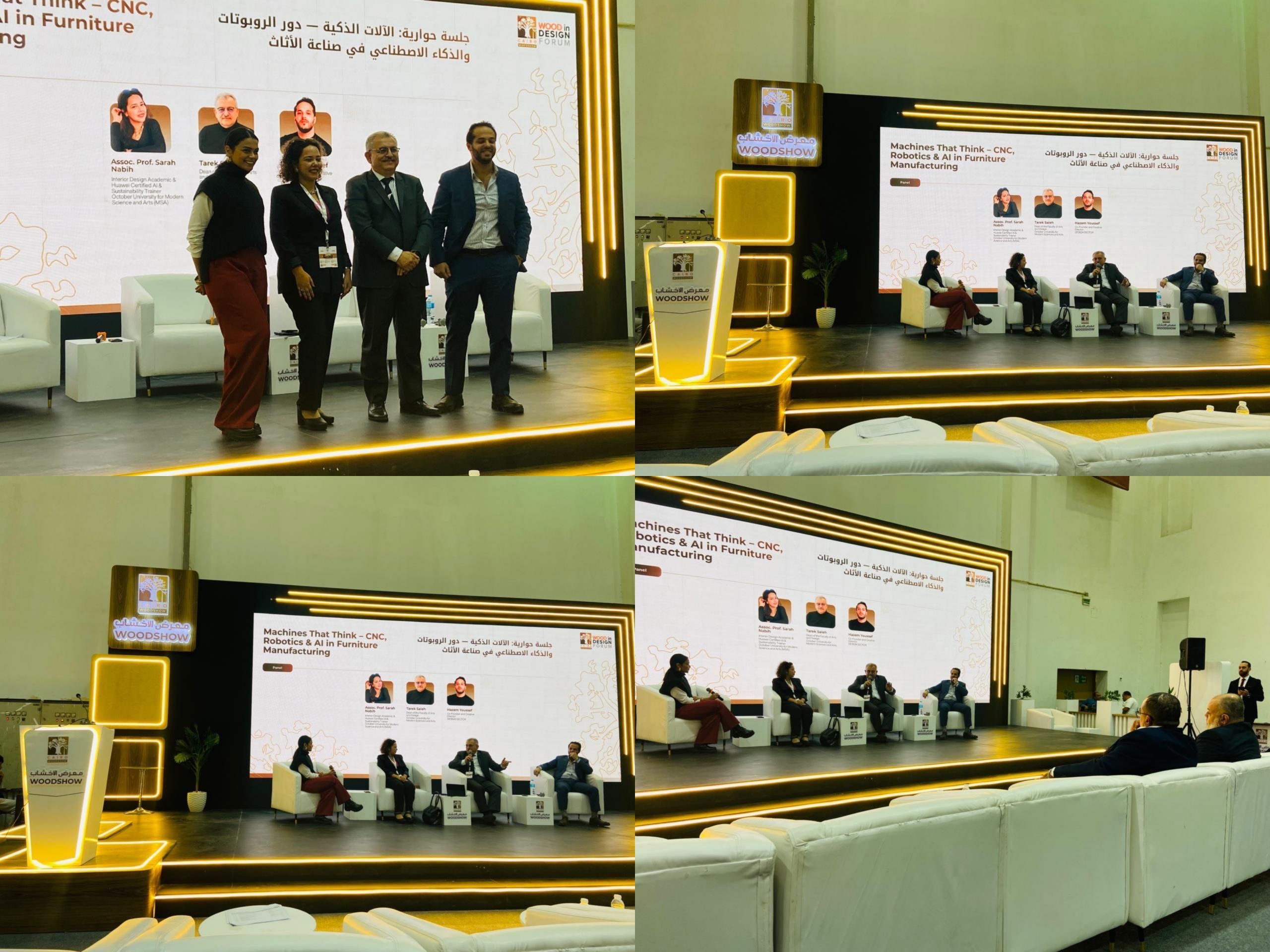
MSA University at the Wood Show Forum: Exploring the Future of Furniture Manufacturing
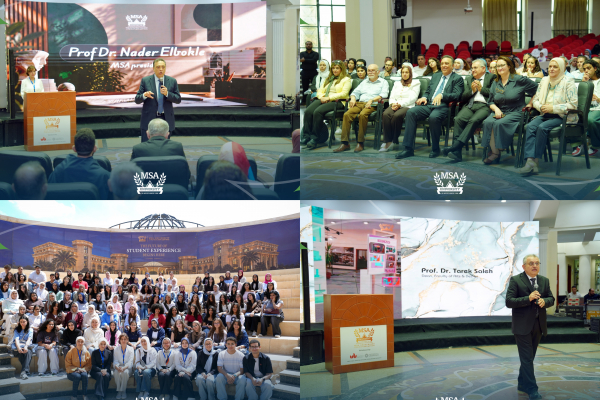
It was an honor for October University for Modern Sciences and Arts (MSA) to participate in a key session at the Wood Show Forum, where Prof. Dr. Tarek Saleh Said was invited as a speaker to present forward-looking insights on the transformation of the furniture manufacturing industry. We were equally pleased to have Dr. Sarah Nabih join the session, contributing to the representation of MSA University’s academic vision for the future of smart, technology-driven production.
During the session, Prof. Dr. Tarek shared essential ideas and advancements shaping the next era of the furniture sector, summarized under the theme:
THE COGNITIVE FACTORY
AI-Driven Transformation in Furniture Manufacturing
From Forest to Final Assembly: How Industry 5.0 is Redefining Craftsmanship By Prof. Dr. Tarek Saleh Said
Prof. Dr. Tarek opened the discussion with a powerful question:
Have you ever imagined a chair designed by an algorithm, carved by a robot capable of “feeling” the wood, and sent to you as a digital file to be manufactured in a nearby workshop?
This concept is no longer futuristic speculation—it is today’s reality. He then outlined the major technological shifts revolutionizing furniture manufacturing:
1- CNC Machines: Unmatched Precision and Efficiency
CNC systems have transformed traditional woodworking into advanced digital fabrication:
- Unprecedented Precision: With tolerances reaching ±0.05 mm, CNC machines enable complex joinery—such as Dogbone joints—that fit together through friction alone, eliminating the need for screws or nails.
- Material Efficiency: Through intelligent “nesting” algorithms, material waste can be reduced from 20% to less than 8%.
- Local Manufacturing Revolution: The emerging model of “Shipping Files, Not Parts” allows designs created in one place to be produced locally anywhere in the world, reducing shipping time, cost, and environmental footprint.
2- Robotics: From Automation to Skilled Craftsmanship
Modern robotics have evolved far beyond simple mechanical movements:
- Delicate Surface Finishing: Equipped with force-sensing technology, robots can sand and polish with sensitivity comparable to skilled artisans.
- Handling Flexible Materials: Using advanced computer vision, robots now stitch and upholster soft materials—previously considered exclusively human tasks.
- Artistic Production: Six-axis robotic arms are capable of intricate sculpting and detailed ornamentation, replicating the precision of master craftsmen.
3 – Artificial Intelligence: The Designer’s Creative and Strategic Ally
AI is reshaping both the creative and operational sides of furniture production:
- Generative Design: AI tools propose efficient, organic structures—like Kartell’s “AI Chair”—that maximize strength while reducing material usage.
- Trend Forecasting: By analyzing massive datasets of online imagery, AI can anticipate upcoming style preferences, colors, and materials.
- Smart Factory Systems: AI enables predictive maintenance, preventing machine failures and optimizing supply chain planning.
Conclusion
The sector is witnessing a decisive shift from traditional manual practices toward integrated, intelligent production systems. The future of furniture manufacturing will be innovative, digitally driven, sustainable, and locally adaptable.
MSA University extends sincere thanks to all attendees and participants, with special appreciation to Eng. Moukid Badie, our dedicated students, and Dr. Sarah Nabih for their valuable presence and contributions.

You may also like